US Completes Strikes on Iran; Iran Retaliates With Attacks on Bahrain, Jordan Bases
A US warplane taking part in Operation Epic Fury. File photo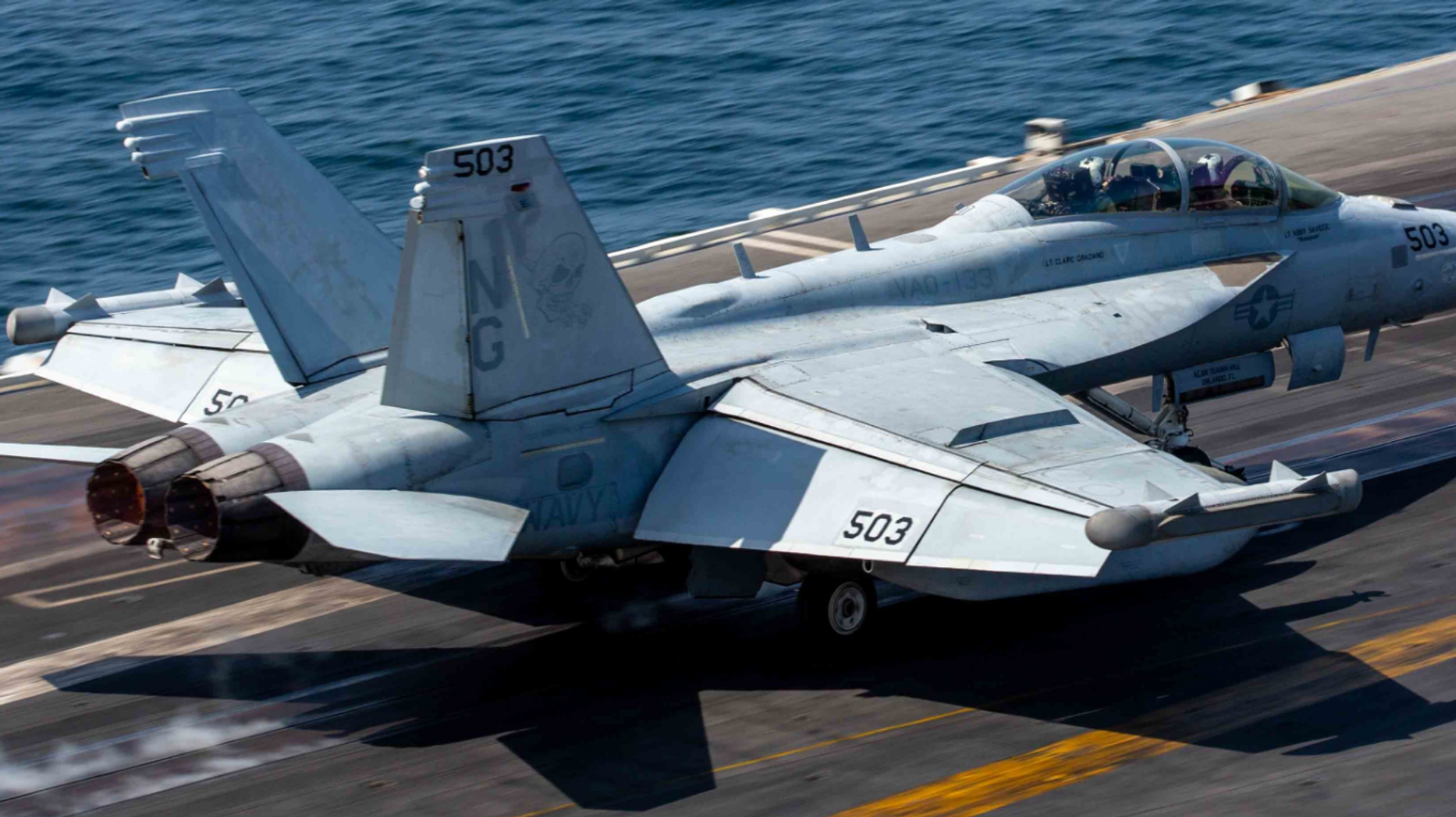
The United States military has completed a series of “self‑defense” strikes against Iranian targets near the Strait of Hormuz, the US Central Command (CENTCOM) announced on Tuesday, hours before Iran launched its own wave of drone and missile attacks on American facilities in Bahrain and Jordan.CENTCOM said the strikes were ordered by President Donald Trump in response to the downing of a US Army Apache helicopter by Iranian fire.“U.S. Central Command forces completed self‑defense strikes against Iran, June 9, at the Commander in Chief’s direction in response to yesterday’s downing of a U.S. Army Apache helicopter,” the command said in a statement on X.The strikes hit Iranian air defense systems, ground control stations, and surveillance radars near the strategic Strait of Hormuz – a critical chokepoint for global oil shipments.“The operation was a proportional response to recent attacks on U.S. forces and international commercial ships transiting regional waters,” CENTCOM added. “U.S. forces remain vigilant and postured to defend against unjustified Iranian aggression.”
Iran Retaliates With Drone, Missile Attacks
The Islamic Revolutionary Guard Corps (IRGC) launched a coordinated retaliation, striking US positions in Bahrain and Jordan.Bahrain – A drone attack targeted the US Fifth Fleet base in Manama. Social media footage showed a direct impact, and air defense sirens were heard across the capital.Jordan – The IRGC struck Al‑Azraq Air Base (also known as Muwaffaq Salti Air Base) with long‑range solid‑fuel missiles. The base, located about 100 km east of Amman, hosts dozens of US F‑35 and F‑15 fighter jets, as well as the 332nd Air Expeditionary Wing.Iranian media reported that the missiles hit F‑35 hangars and the command control center.Air defense activity was also reported across Kuwait as projectiles flew overhead.
Iran’s Warning: “Leave Our Region”
Iranian Foreign Minister Abbas Araghchi had earlier warned US forces to leave the region to avoid further conflict.“Leave our region if you want to be safe,” Araghchi said after the initial US strikes. “History of the Persian Gulf has many chapters on dire fates of intruding outsiders.”On February 28, the United States and Israel launched strikes on targets in Iran, including in Tehran, causing damage and civilian casualties. Iran responded by striking Israeli territory and US military facilities in the Middle East. On April 7, Washington and Tehran announced a ceasefire. Subsequent talks held in Islamabad ended without a breakthrough.