Pakistan ‘Natural Connector’ for China’s BRI & Russia’s INSTC — Pakistan’s Ambassador
Pakistan’s Ambassador to Russia Faisal Niaz Tirmizi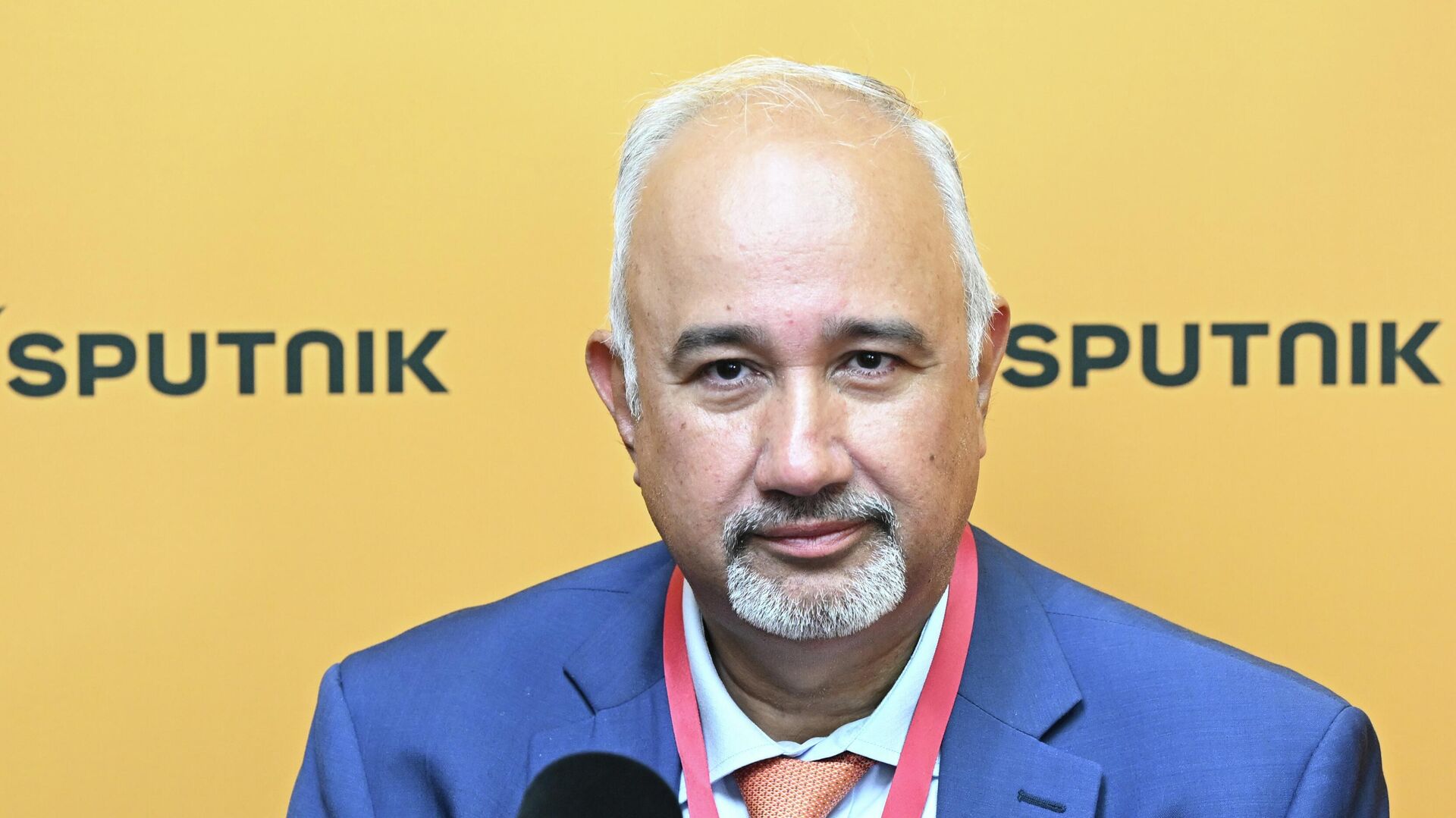
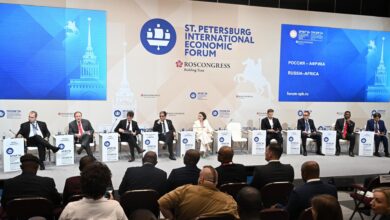
Faisal Niaz Tirmizi, Ambassador of the Islamic Republic of Pakistan to the Russian Federation, gave an exclusive interview to Sputnik on the sidelines of SPIEF.Sputnik: Your Excellency, what are Pakistan’s key objectives at this year’s SPIEF, and what message is Pakistan bringing to the Russian business community?Faisal Niaz Tirmizi: Pakistan is a country which is situated at the crossroads of three major regions of the world: Central Asia, South Asia, and the Middle East. Pakistan is the natural nodal point of the North-South Transport Corridor, a vision of President Vladimir Putin, which he gave in 2015. Gwadar and Karachi are the southern nodal points of that order. We have a presence from Pakistan — a deputy minister for water and power who is participating. We have a few companies from Pakistan who are participating in this year’s SPIEF. Pakistan considers SPIEF to be one of the leading forums, which gives an opportunity to political, business, academic, and cultural leaders to sit across each other and discuss issues of vital concern for everyone. So, of course, this morning the deputy minister was at the session on water and power, an issue which is of extreme importance to Pakistan. He will be having meetings with his counterparts during the SPIEF. So, we have always participated in SPIEF with a big participation, and even this year, we have around 10–12 delegates participating in it. And next year, we would like to have a session on Pakistan in order to market Pakistan, because Pakistan is a very interesting country. As I said, it is at the crossroads of three regions, and it is a country of 260 million. So, at a time when the world is looking for workforce, skilled workforce, Pakistan is the destination. Then Pakistan is a great opportunity for tourism, as I say Alexander the Great came to Pakistan in 326 BC. So, we would welcome Russian tourists to come and visit Pakistan, which is an old civilization. The Hindu religion has its origins in Pakistan, so does the Sikh religion. Buddhism went to China and Japan from a university in Pakistan. Islam has a big influence, Christianity has a big influence. It’s historical — a lot of historical sites, cultural sites, and a lot of beauty. It has the second highest mountain in the world. Out of 14 mountains over 8,000 meters, five are in Pakistan. Pakistan has 102 mountains over 7,000 meters. Pakistan could be the next destination of skiing in the world because there are places where you can ski in summers in Pakistan as well. So that’s what Pakistan is here for. We are here to project Pakistan and to have more connection with our Russian partners, as well as partners from other friendly countries who have gathered in this beautiful city of St. Petersburg, which has so much history, so much culture, and so much bravery. WorldPakistan ‘Сould Open the Gates’ for Russia’s Oil and Gas Exploration – Minister 5 December 2024, 11:24 GMTSputnik: Which industries offer the greatest untapped opportunities for Russian investors in Pakistan?Faisal Niaz Tirmizi: One thing that I always say is IT. Information Technology is one thing in which both the Russians and the Pakistanis can work very closely. Second industry, of course, Russia has offered us — we want Russian investment and resources in the water and power sector of Pakistan. Russia had already built the first steel mill in Pakistan in the ’80s, and we are trying to re-establish that steel mill. Then, as I say, tourism. Russia, Pakistan could be a great destination because we have around 1,600 kilometers of beaches, and we have the mountains, and we have a cultural thing, so tourism is one thing that we can also work on. And then, of course, Russia is a major supplier of oil and gas, and with the current war going on in the Middle East, Pakistan is looking for alternative sources of energy as well. So there’s so many — and agriculture. That’s what I say when I met one of the deputy ministers of agriculture. We said Russia could be the food security of Pakistan, and Pakistan could be the food security of Russia. Russia is a civilizational country of rivers Don and Volga, so is the Indus River. So there’s so much commonality that we can work in. We’re all part of the Eurasian landmass, so the sky is the limit between the two countries.Sputnik: What is the single biggest opportunity that Russian investors continue to overlook in Pakistan?Faisal Niaz Tirmizi: I believe Pakistan is a great tourist destination and it is a market of 260 million. It is right next to two markets of 1.4 billion each, China and India. So Russia has to look at Pakistan as a tourist destination, as a business destination, and as a destination where people can invest in the IT sector. We have a lot of young people, the highest number of IT experts in the world, who are doing wonders. The best IT company of the Gulf is Careem, which was bought for $3.2 billion. It was set up by Pakistanis, so Pakistanis are now making headways in different sectors and they have a young workforce. Russia is looking for people to work. 12 million Pakistanis work and live abroad. As you’re aware, the Mayor of London is of Pakistani origin. There are six ministers in the UK cabinet of Pakistani origin and 30 people in the UK parliament of Pakistani origin. We have the highest number of doctors — second highest number of foreign-trained doctors in the US and the highest number of trained doctors in the UK and the second highest number of trained doctors in the Gulf region. So there’s so many disguised opportunities because unfortunately over the years we have not had that much interaction between Russia and Pakistan, and a forum like SPIEF gives us an opportunity to understand and appreciate each other and each other’s strengths.
 RussiaPakistan’s Ambassador to Russia Confirms Oil Negotiations, Coordination Over US-Iran Ceasefire15 April, 15:04 GMTSputnik: Pakistan opened six land corridors with Iran in April 2026, cutting transit time by up to 87% and costs by 45-55%. These corridors are mainly aimed at Central Asian markets, but what about Russia?Faisal Niaz Tirmizi: Ultimately, that’s what I say — that the ultimate market is Russia. That’s what I say — that because of some problems with Afghanistan, we had to look for alternatives. So we have started a route through Iran as well as through China and Kyrgyzstan. But we know very well the biggest market in that whole region is Russia, and that’s what we’re working on. Pakistan is already a part of the China-Pakistan Economic Corridor, which is the biggest arm of the Belt and Road Initiative. So Pakistan would be a natural connector between BRI and the North-South Transport Corridor. It will link Russia, China, Central Asia to Pakistan, Asia, as well as the Middle East and Africa. So that’s a great opportunity, and both countries are discussing to set up railway lines, road links, and I am pretty sure that in my lifetime, people will be able to travel from Islamabad to Moscow by road in three, four, five days maximum, or by train in three days. So that’s the linkages that we are thinking of and working on at present.Sputnik: What role, if any, could Iran play in facilitating Pakistan-Russia trade?Faisal Niaz Tirmizi: Well, as I said, Iran is being used as a transit for trade with Russia right now, and of course, Iran is a good friend of Pakistan and Iran is a good friend of Russia. We share a 906-kilometer border with Iran, and we have a lot of… My language is after Hindi, the closest language which comes easiest to me is the Persian language. So if I go to Iran after two, three days, I don’t have any issue in communicating with people on the street. So Iran could be a great facilitator, and they are three old countries with great civilizational heritage behind them. We share geography with Iran. Iran has only Azerbaijan and Russia. So we are working on those linkages. These are historical linkages between those regions, which have existed for centuries. And we are trying to revive them after a hiatus of many years.Sputnik: Your Excellency, following the February 2026 agreement in Istanbul to launch direct Moscow-Islamabad flights without delay, could you share an update on progress and the next steps?Faisal Niaz Tirmizi: We have already identified one Pakistani airline that could start a flight to Russia. I was posted in Russia 32 years ago. At that time, we had two, three connections between Pakistan and Russia. There was a weekly flight from PIA and two flights from Aeroflot. Now we will be signing a visa agreement, a readmission agreement in Bishkek on the 4th of June — that would facilitate visas. So once the visa process is facilitated, I want more tourists, more students, more workers, more businessmen to come to Russia and similarly for more people, businessmen and tourists to go to Pakistan. If there is enough traffic, there will be enough flights. I’m coming from the UAE, and we had over 600 weekly flights between UAE and Pakistan. So, if there is enough business and traffic, it should have at least 60 flights between the Russian Federation and Pakistan as well.
 WorldPakistan Seeks ‘Strategic IT Partnership’ With Russia — Telecom Minister19 September 2025, 11:02 GMTSputnik: When might we expect the first regular flights to begin?Faisal Niaz Tirmizi: If you ask me — a couple of years, one year or two years. We are now working on the handicaps or hiccups which have not helped us in addressing this problem. So now that’s what we are working on, and hopefully, next year or the year after that, the flights between the two countries will start.Sputnik: Your Excellency, you have been actively lobbying to open the Russian market to Pakistani agricultural products. Why is Pakistan placing such an emphasis on this food diplomacy, and why does greater agricultural cooperation between Russia and Pakistan make sense?Faisal Niaz Tirmizi: That’s what I say. Russia is part of Pakistan’s food security and Pakistan is a part of Russian food security, because when there’s a long winter in Russia, there’s a lot of sun in Pakistan, and we are a major producer of agricultural products. We are probably the second or third biggest producer of rice in the world. Similarly, we are one of the major producers of cotton. We are the major producer of mangoes. So there’s so much that we can — potatoes — that we can sell to Russia. Similarly, Pakistan has bought half a billion dollars’ worth of grain from Russia two years ago. Although we meet our needs, but when we don’t have enough resources, Russia could be a natural source of importing wheat for Pakistan. I believe food, music, and culture really bring people and cultures together. So I believe if we start with the food, then the music, then culture, that would be a natural progression of relationship between the two countries and the peoples of both countries.