NASA’s High-Stakes Gamble vs. China’s Clockwork Advance in Race to Mars
China’s Tianwen-1 Mars orbiter captured this stunning selfie above the Red Planet by jettisoning a small camera and beaming photos via WiFi to the mothership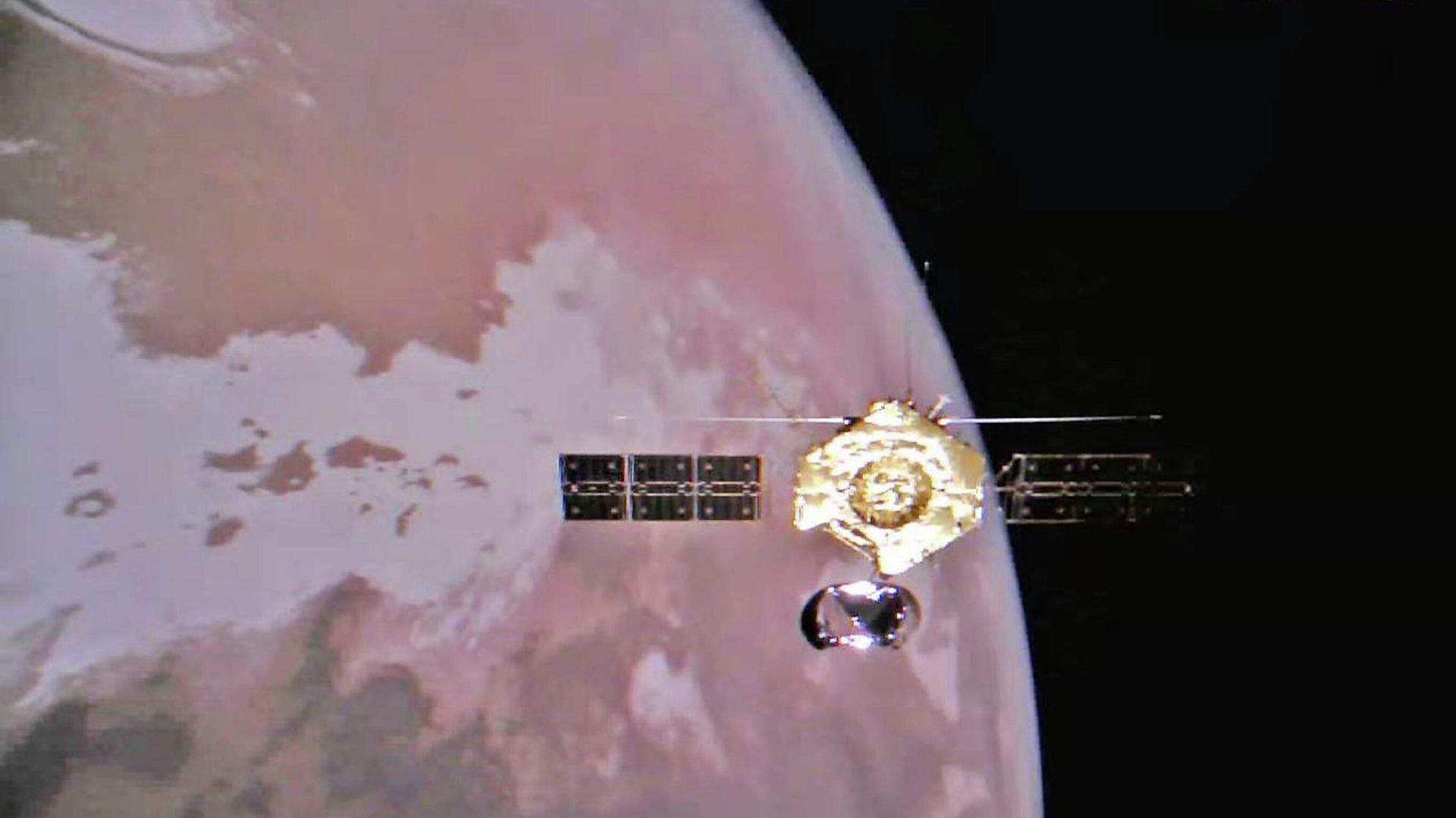
NASA has tapped Relativity Space, a 3D-printing rocket startup led by former Google executive Eric Schmidt, to deliver the Aeolus Mars orbiter mission, targeting a launch in 2028.China’s Tianwen-3 Mars sample-return mission is well on track for the same launch window.The contrast is striking: NASA is betting on a fast-moving private-sector newcomer, while China is relying on tested hardware and a methodical strategy.Aeolus will provide the first daily global monitoring of Martian dust storms, winds, and temperatures, helping prepare future missions and human explorationRelativity will supply the spacecraft and its new Terran R rocket — a heavy-lift vehicle that is yet to fly, with a maiden launch set for late 2026The company’s earlier Terran 1 rocket failed during its first orbital attempt in 2023 after an upper-stage engine anomalyMeanwhile, China’s Tianwen-3 uses two proven Long March 5 rockets, featuring a lander, ascender, orbiter, and return capsule — building directly on Tianwen-1 and Chang’e lunar successes.
It aims to return Mars samples to Earth by 2031, potentially achieving a historic first.