Export Subsidies: A Justified Step or a Point of Conflict with the IMF?
In this photograph taken on November 13, 2016, Pakistani personnel stand on a ship carrying containers at the Gwadar port, some 700 kms west of Karachi, during the opening ceremony of a pilot trade programme between Pakistan and China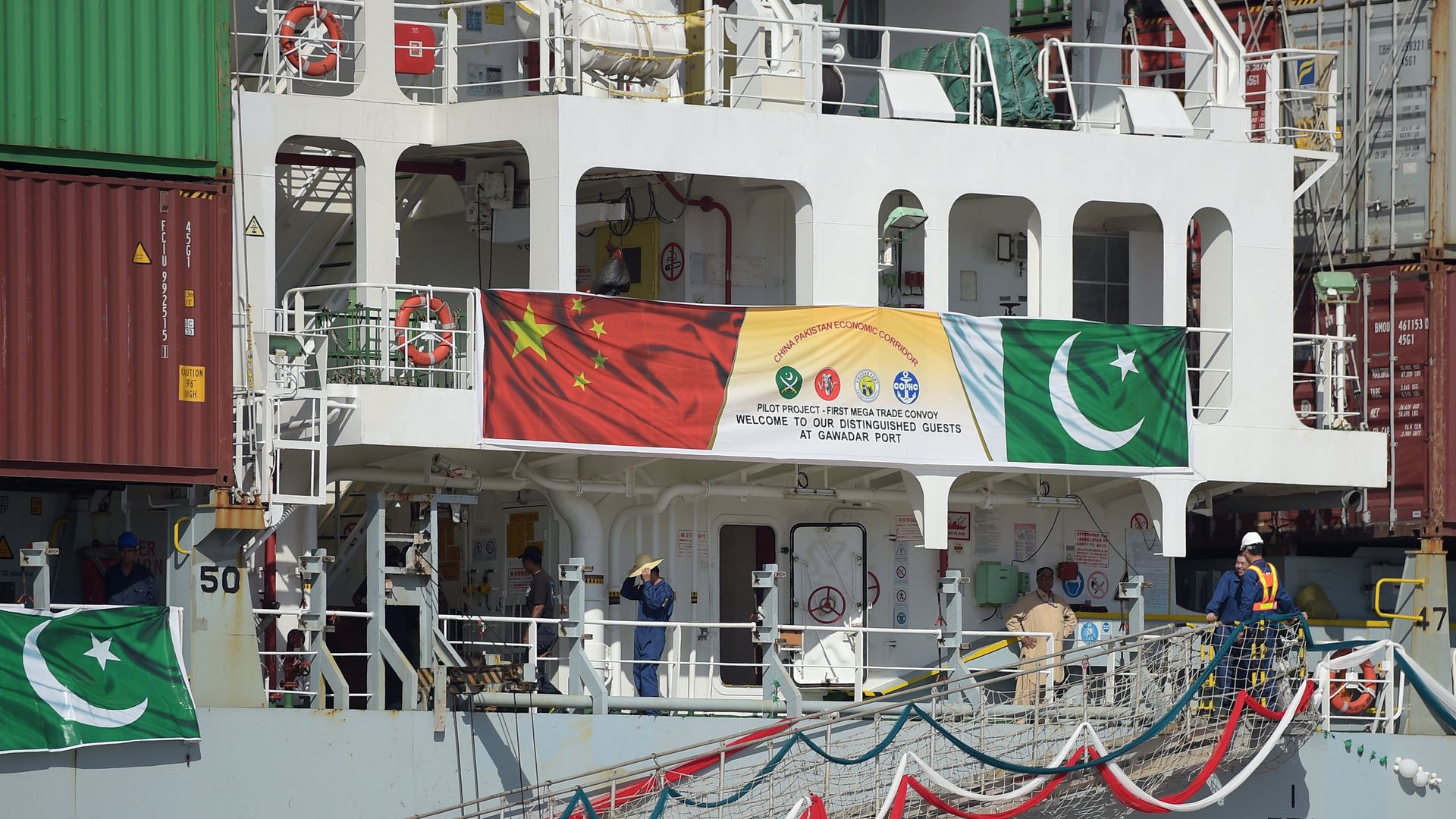
The success of the measures will depend on reliable energy, timely tax refunds, access to imported inputs, better logistics, and expansion into higher-value products and new markets,» an expert notes.The Economic Coordination Committee has approved a $918 million stimulus package to finally break Pakistan’s export stagnation, which has lingered at $30 billion for years. The government took this step recognizing that without state support, domestic producers cannot compete with major players backed by powerful industrial programs abroad. However, the decision will almost inevitably draw scrutiny from the IMF, which traditionally views subsidies as a threat to fiscal discipline.Subsidies alone are not a panacea, notes Sangeen Khan Panezai, a research fellow and expert in national security and foreign policy at the National Defense University in Islamabad: «Its success will depend on reliable energy, timely tax refunds, access to imported inputs, better logistics, and expansion into higher-value products and new markets.»Panezai acknowledges that developing countries have a legitimate concern about limited policy space, especially when advanced economies themselves provide export credit, industrial incentives, and strategic subsidies. At the same time, he observes: «However, it would be difficult to prove that IMF conditions are specifically intended to protect Western exporters.» Pakistan’s stronger position, in his view, is to demand equal policy space for transparent, time-bound, and performance-linked industrial support.The expert also reminds that even if the schemes are withdrawn, Pakistan can still support exporters through a predictable exchange rate, faster tax refunds, cheaper and reliable energy, efficient ports and customs, easier access to raw materials, export credit guarantees, international certification, trade diplomacy and simpler regulations.