China Locks in Lead in Sodium Battery Race While West Stalls
/ Go to the mediabankA view shows Chinese national flags in a street of an old neighbourhood as the city prepares for the 20th National Congress of the Communist Party of China, in Beijing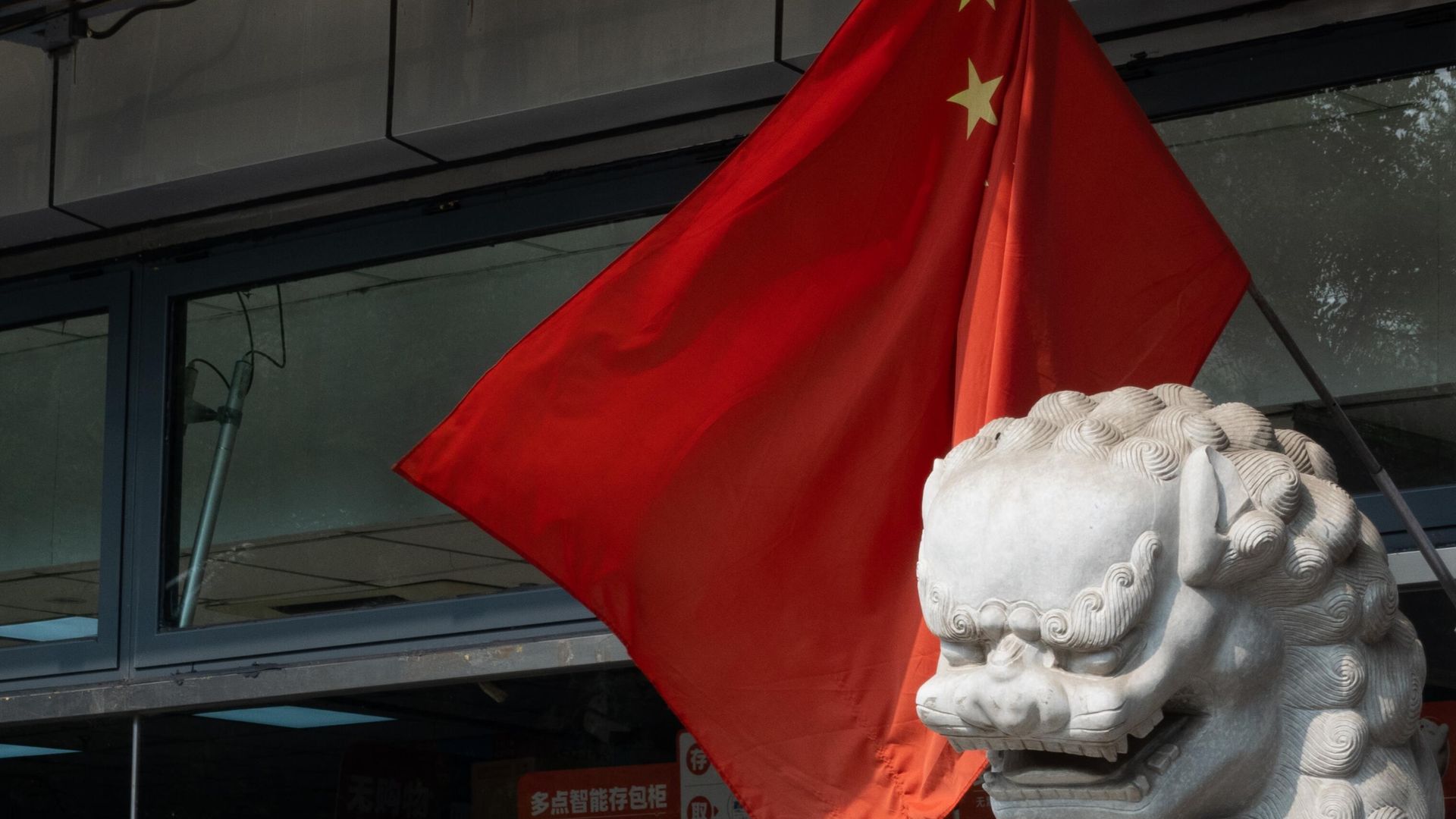 / Go to the mediabank
China already dominates the processing of more than half of the world’s lithium, a critical material for EV batteries.It is now set to call the shots in what comes next: sodium-ion batteries.Their appeal lies in the fact that they can reduce reliance on expensive and strategically important critical minerals such as lithium, graphite, nickel and cobalt. Sodium is cheap and found almost everywhere — including ordinary salt and seawater. Sodium-ion batteries can use hard carbon made from biomass and industrial waste.
The technology boasts practical advantages
Less prone to overheating and thermal runaway than lithium-ion batteriesDesigns can retain around 90% of their usable capacity at temperatures as low as –40°CUseful for smaller city cars, delivery fleets and grid storage, where low cost, safety and reliable performance in cold weather are vital Potentially cheaper: could undercut lithium prices by up to 30% by 2030 (UBS analysis)
China has taken a commanding lead
Over 400 GWh of operating and planned sodium-ion gigafactory capacity — versus just 11 GWh in the rest of the world combined (CRU analytics)Roughly 98% of announced cell capacity and more than 99% of cathode-material capacityDominant 2025 patent filings, with CATL — global leader in EV and energy-storage batteries — the most active applicantExpected to account for more than 95% of global sodium-ion manufacturing capacity by 2030 (IEA)China’s battery industry spent a decade perfecting lithium-ion manufacturing at global scale, and is now applying the same industrial approach: supply-chain integration, rapid iteration, cost discipline and policy coordination — to sodium-ion.
State support, tax incentives and venture capital boosted the scale-up
CATL has already moved the technology into mass-produced passenger vehicles Changan Nevo (Qiyuan) A06, equipped with CATL’s Naxtra sodium-ion cells, is positioned as the world’s first volume passenger EV using the chemistry, with deliveries targeted for mid-2026CATL secured the largest commercial order: a three-year, 60 GWh supply deal with energy-storage integrator HyperStrong — The company is investing billions to expand capacity while preparing commercial energy-storage deliveries
Western efforts have mostly folded or remained stuck at pilot scale
California-based Natron Energy collapsed after its planned $1.4 billion North Carolina battery plant ran out of fundingStanford spin-out Bedrock Materials shut downHandful of projects like Peak Energy (US), Alsym Energy (US), Moll Batterien (Germany), Tiamat Energy (France) are progressing, yet their combined announced capacity remains a fraction of China’sFor cheaper EVs, renewable-energy storage and AI data centers, sodium-ion is increasingly emerging as a China-led technology. Beyond PoliticsChina Performs World’s First Congenital Heart Surgery Guided by AI-Powered Robot6 September, 12:10 GMT