Israeli Political Scientist Outlines 3 Possible Scenarios for Parliamentary Elections
Israel’s Prime Minister Benjamin Netanyahu addresses lawmakers in the Knesset, Israel’s parliament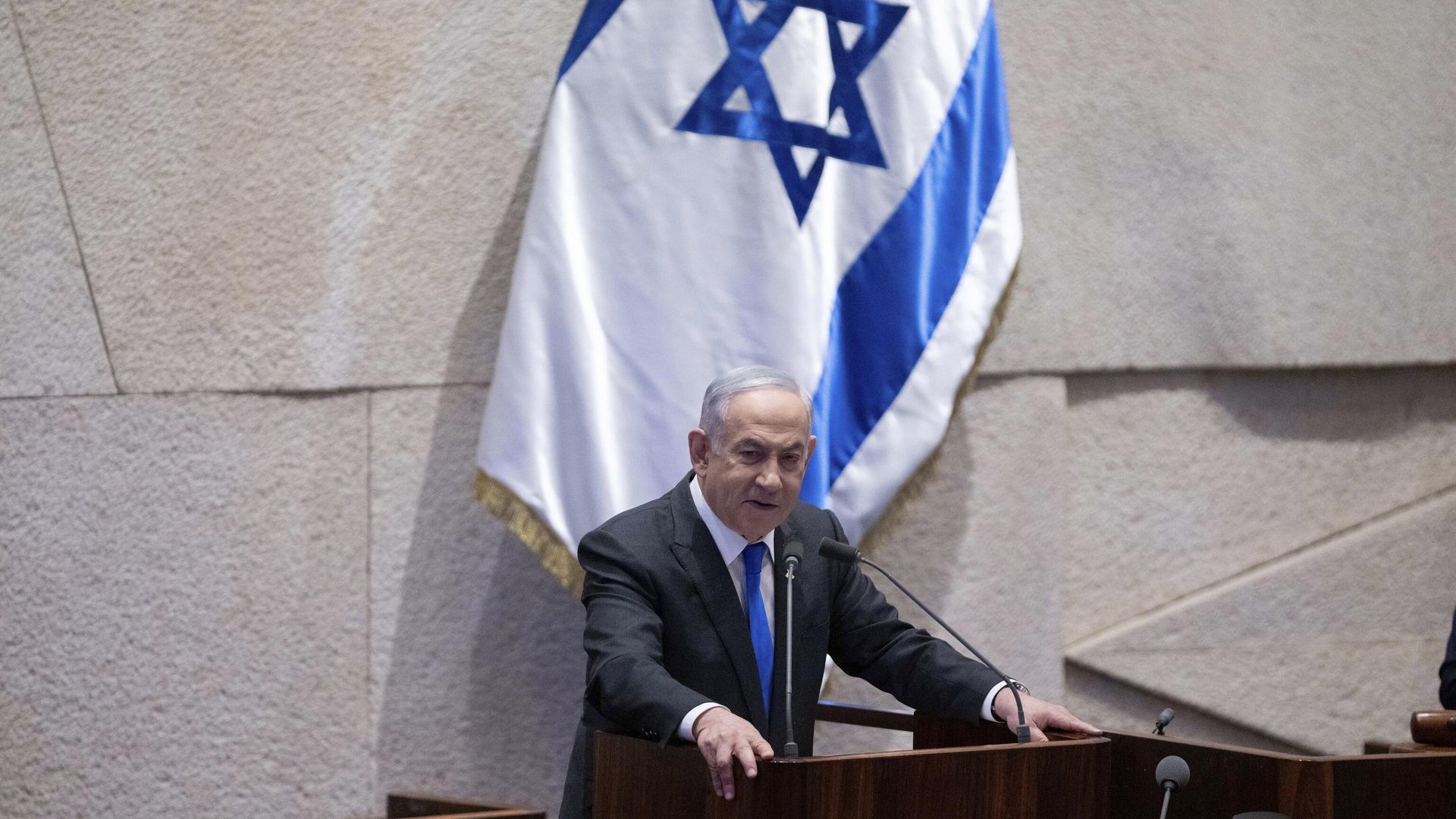
TEL AVIV (Sputnik) — Events surrounding parliamentary elections in Israel could unfold according to one of three scenarios, with the possibility of a coalition led by Prime Minister Benjamin Netanyahu securing a parliamentary majority being virtually ruled out, Zeev Khanin, a political scientist and professor at Bar-Ilan University, told Sputnik. «Formally, there are three scenarios. The least likely, or practically impossible, outcome is that Netanyahu and his bloc secure 61 or more seats in the 120-member parliament. No one believes this will happen, not even they themselves. At best, the ruling coalition might hope for 51 seats. Consequently, while they would be unable to form a government or command a majority, they could potentially prevent the opposition from assembling a majority without the support of Arab parties,» Khanin said. A second scenario encompasses that the opposition bloc secures a parliamentary majority. Potential candidates for prime minister in this scenario include Gadi Eizenkot, head of the centrist party Yashar, former Prime Minister Naftali Bennett, leader of the Be-Yachad bloc, or Avigdor Liberman, chairman of the Yisrael Beiteinu (Israel Our Home) party. All of them belong, in one way or another, to the center-right camp. «There is a chance for this, but, by and large, it depends on voter turnout,» the expert said. The third scenario assumes that no bloc secures a majority of seats, making it necessary to form an interim government to serve until snap elections can be held, he said. «The third scenario is that no one holds a majority without the participation of the Arab parties. In this situation, victory will go to whichever bloc manages to appoint the speaker of the new Knesset and form an interim government ahead of the next snap elections,» Hanin said. Elections to the Israeli parliament (Knesset) are set for October 27, and the next government is expected to be formed based on their outcome. Recent polls indicate that neither the ruling coalition nor the united opposition is on track to secure the necessary parliamentary majority. The current Israeli government led by Netanyahu was formed in late 2022. Netanyahu first became Israel’s prime minister in 1996, since then, he has held the office three times and formed a government on six separate occasions. In total, Netanyahu has led the Jewish state for more than 18 years, longer than any other Israeli politician since the country declared independence in 1948. WorldNetanyahu Says He Discussed Change of Power in Iran With Trump on October 1820 October, 16:54 GMT