Reported US Push Against Chinese AI Reflects Anxiety Over Eroding Its Tech Supremacy — Experts
A visitor past by an ad promoting Artificial Intelligence for the upcoming World Artificial Intelligence Conference held in Shanghai, Wednesday, July 5, 2023. (AP Photo/Ng Han Guan)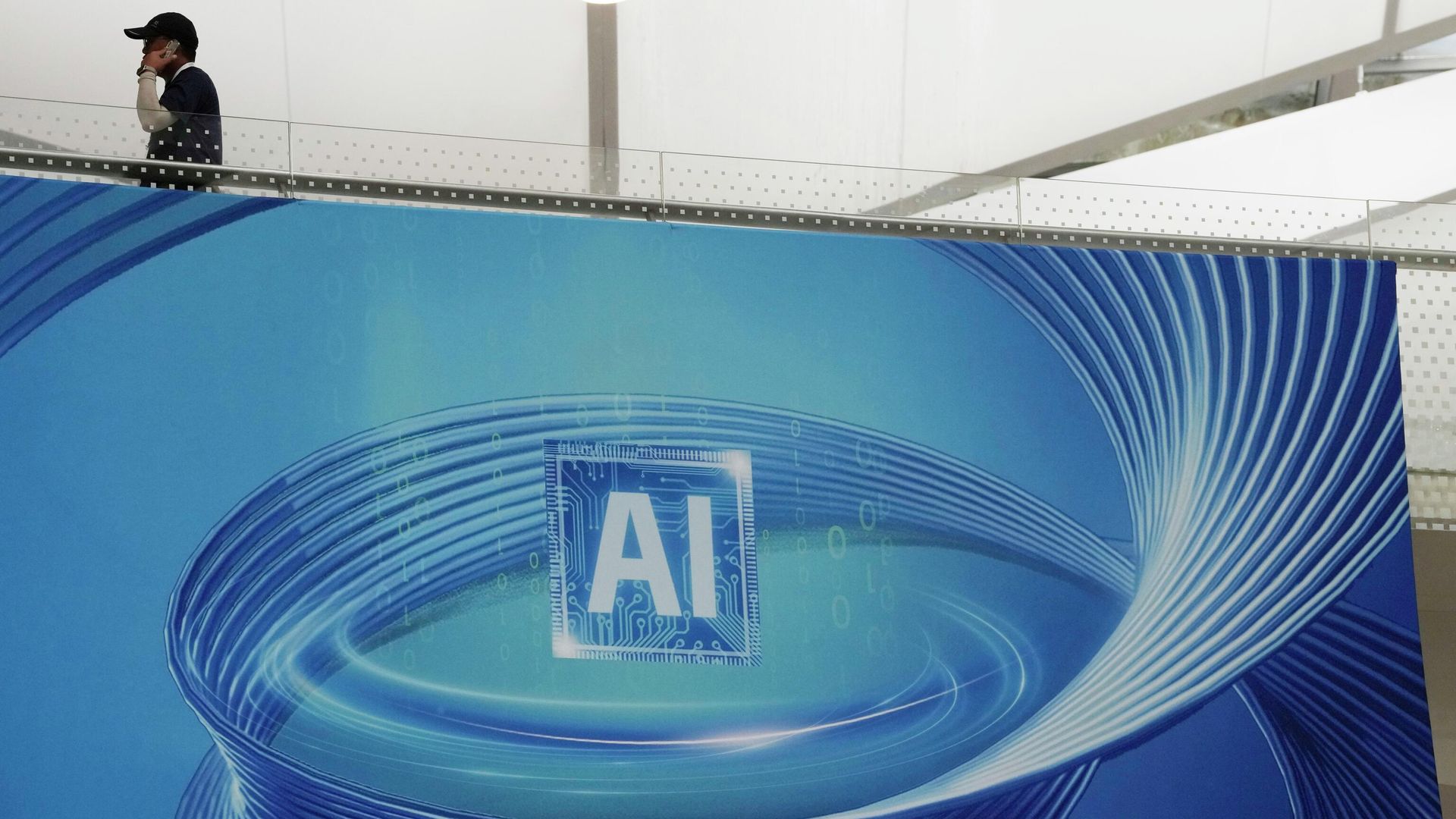
The Trump administration is showing signs that it could move to ban cutting-edge Chinese artificial intelligence (AI) models, as the emergence of China’s open-source Kimi K3 model has revived earlier efforts, US media outlet Axios reported on Monday local time. Chinese experts said that the reported push by the US reflects growing anxiety that its technological monopoly is being challenged, along with fears over the erosion of its global technological hegemony. They said that such attempted restrictions will only expose weaknesses in the US AI sector and would not halt China’s technological progress.Parts of the administration have tried to implement de facto bans on foreign open-source models before, and last week’s rise of Chinese model Kimi is reigniting those efforts, Axios reported, citing knowledgeable sources.
Pro-competition voices fear the implications. US companies are increasingly using open-source models from China because they’re cheaper and, as seen by the advent of Kimi, just about as good as the US technology, Axios reported.
The US views AI as a critical arena in its strategic competition with China and has sought to contain China’s advances, from computing chips to large-language models (LLMs), to preserve its AI dominance and reap outsized profits from its technological monopoly, Ma Jihua, a veteran tech analyst, told the Global Times.
Ma noted that the reported US push reflects growing anxiety over its weakening monopoly and global technological dominance, as well as concerns about losing its rule-setting power.
Zhou Mi, a researcher at the Chinese Academy of International Trade and Economic Cooperation, told the Global Times that the US is anxiously seeking to curb China’s AI progress following Kimi’s recent breakthrough. However, such restrictions would be difficult to enforce, as China’s AI development does not depend entirely on US computing resources, while US companies also benefit from Chinese models.
The just-concluded World Artificial Intelligence Conference in Shanghai highlighted broad demand for international cooperation on AI governance and rule-making, Zhou said. «A technological monopoly is increasingly difficult to sustain, and unilateral US restrictions are unlikely to achieve their intended goals,» he said.Last summer, the US Commerce Department circulated draft rules within the administration that would leverage its authority to secure domestic supply chains to target Chinese open-source models, another source told Axios. However, administration officials concerned that regulation could stifle innovation blocked all those efforts. Since then, key voices, including former White House adviser Sriram Krishnan, have left the administration, while national security hawks have grown increasingly vocal, Axios reported.»What’s actually happening is slower and more durable,» one source familiar with government discussions said, citing procurement rules, Entity List threats and public pressure campaigns aimed at US companies using Chinese models, Axios reported. AsiaChina Opposes Technical Blockade in AI — Foreign Ministry16 July, 11:32 GMTHowever, more measured voices have also emerged. US technology investor Bill Gurley said that the rise of open models is a good thing, according to Business Insider.»The open-model wave is not an attack on AI companies. It is the market responding to the fortune they say they are about to make,» Gurley wrote in a Washington Post op-ed. Gurley warned that if the US government were to rein in open-source models, it could leave companies such as OpenAI and Anthropic with effective monopolies.US restrictions have failed to prevent some Chinese models from emerging and demonstrating their strengths, Zhou said. Inward-looking, protectionist measures will only distort the US market and hinder its own technological progress, while China’s vast market will continue to drive innovation and support global AI applications, representing momentum that will be difficult to stop.Powerful US alternatives are still limited at best compared with cheaper and more practical Chinese models, Axios reported.From DeepSeek and Kimi to Zhipu AI and Qwen, Chinese AI models and agent applications are flourishing, rapidly improving through open-source development and driving down deployment costs, Ma said. The growing adoption of Chinese open-source models by US companies is a natural market choice, and Washington’s attempted restrictions are unlikely to be enforceable. Moonshot AI, the Beijing-based tech company, last week released Kimi K3, a new open-source AI model with 2.8 trillion parameters. According to the company, Kimi K3 is the largest open-source model in the world by parameter scale, and natively supports visual understanding and can process up to 1 million tokens of context, significantly expanding its ability to handle long and complex tasks.Within hours of its release, Kimi K3 climbed to the top of the closely watched Frontend Code Arena run by Arena, a platform that evaluates AI models, becoming the first Chinese LLM to lead the ranking. It scored 1,679 points, ahead of Anthropic’s Claude Fable 5 at 1,631, and ranked first in six of the benchmark’s seven categories.US AI scholar Gary Marcus wrote on his personal blog on Monday that Kimi K3 is «largely on a par with the best American models.» Unlike leading US models, Kimi K3 is an open-weight model that users with sufficient hardware can download and run locally for free. Its emergence calls the business models of OpenAI and Anthropic into serious question, could severely undermine their IPO prospects, and casts further doubt on the idea that the US could «win» the AI race, Marcus said.Given the breadth of China’s AI ecosystem, any attempt at a comprehensive blockade would effectively sever China-US technological ties — a cost neither the US government nor its market could afford, Chinese experts said, stressing that China’s AI sector welcomes healthy competition and seeks shared technological progress.AI is the common asset of humanity. The flourishing AI sector in China comes from greater self-reliance and strength in science and technology, and is fueled by China’s vision of extensive consultation and joint contribution for shared benefit, Foreign Ministry spokesperson Lin Jian said in March.China encourages open source to make AI more accessible, Lin said, noting that we stand ready to work with all sides to deepen communication and cooperation, and jointly build an open, inclusive and mutually beneficial environment for development, so that AI could truly become an international public good for good and for all.
 WorldAI Development Must Not Harm Diversity of Civilizations — Xi Jinping17 July, 08:02 GMTThis article originally appeared on the Global Times website.