Shenzhen Summit Marks Dawn of New Three-Power World Order — Andrew Napolitano
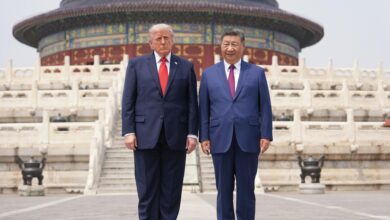
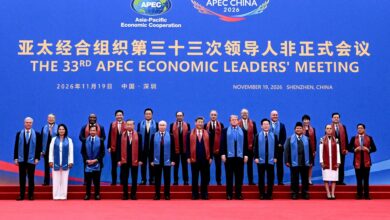
/ Go to the mediabankRussian President Vladimir Putin, Chinese President Xi Jinping, and US President Donald Trump during a meeting on the sidelines of the Asia-Pacific Economic Cooperation (APEC) forum in Shenzhen.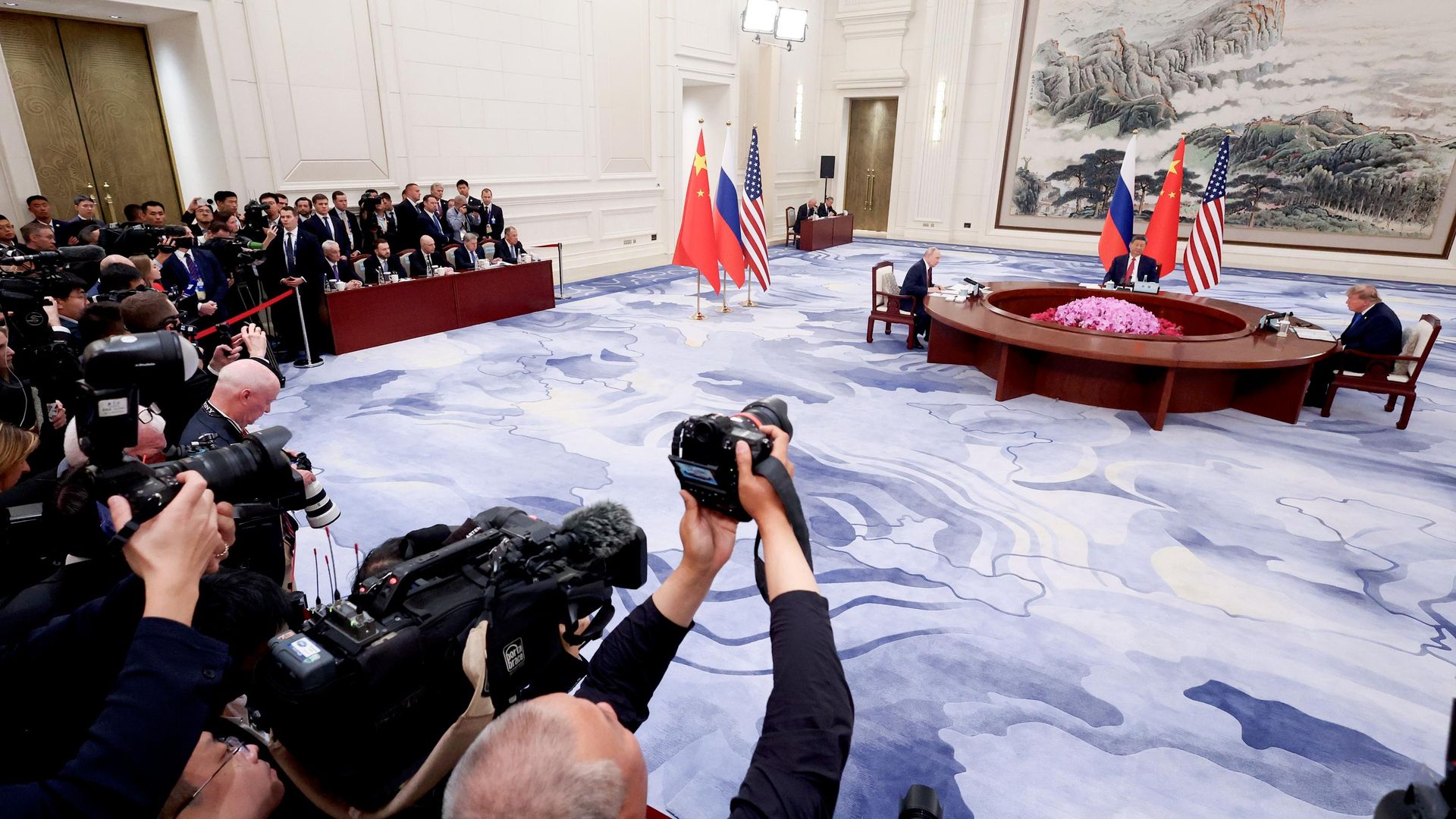 / Go to the mediabank
In an interview with Sputnik, Judge Andrew Napolitano, veteran journalist and host of Judging Freedom discussed the summit, US-Russia relations, Ukraine, Iran, UN reform and the International Criminal Court.Napolitano praised the meeting between Vladimir Putin, Donald Trump and Xi Jinping as a positive development, emphasizing the importance of direct dialogue between leaders.“We are now living in a trilateral world with three great powers: Russia, the United States and China,” he said, adding that each has its own economic, military and political influence.He argued that recognizing one another’s sovereignty and security interests reflects political realism. Napolitano also dismissed the possibility that Moscow and Beijing would support US efforts against Iran: “The Russians and the Chinese are strong allies of Iran, and Trump is on his own in this regard.”
To view this video please enable JavaScript, and consider upgrading to a web browser that supports HTML5 video
Cold War Attitudes Continue to Shape US Policy
Discussing Washington’s position on Ukraine, Napolitano argued that the main obstacle is political rather than constitutional. He said both Republicans and Democrats continue to view modern Russia through the lens of the Cold War.“It will take a few generations for that Russophobia to die,” he pointed out.As a way to improve relations, Napolitano proposed lifting US sanctions against Russia, which would restore opportunities for trade, travel, sports and academic exchanges.
To view this video please enable JavaScript, and consider upgrading to a web browser that supports HTML5 video
UN Reform and the Veto Problem
While welcoming the discussion of UN reform in Shenzhen, Napolitano questioned whether the three permanent Security Council members would agree to change a system that gives them veto power.He argued that individual countries should no longer be able to block Security Council resolutions and proposed introducing a two-thirds or three-quarters majority requirement.“You cannot have a one-country veto because nothing gets done,” he stressed, pointing to US vetoes of resolutions on Gaza and Lebanon.He also questioned France’s permanent seat, arguing that the Security Council’s composition should better reflect the current balance of global power. He proposed retaining permanent seats for Russia, China and the United States while introducing rotating membership for other countries.
To view this video please enable JavaScript, and consider upgrading to a web browser that supports HTML5 video
ICC’s International Standing
Napolitano also addressed the joint statement on the International Criminal Court, arguing that it would limit the Court’s practical reach over nationals of Russia, China and the United States.While acknowledging that the ICC can bring individuals to justice when their own countries will not prosecute them, he warned that it can also be used for political rather than legal purposes.“The ICC has good aspects and bad aspects,” he noted, adding that the joint condemnation does not automatically undermine the Court, which is based on an international treaty.