Mecca Alliance Moves Beyond Declarations with Pakistan at the Helm
Prime Minister of Islamic Republic of Pakistan H.E Muhammad Shehbaz Sharif, His Royal Highness Prince Mohammed bin Salman bin Abdulaziz Al Saud, Crown Prince and Prime Minister of Saudi Arabia, H.E. Mr. Recep Tayyip Erdoğan, President of the Republic of Türkiye signed the Makkah Joint Defence Agreement. Makkah, 7 August 2026.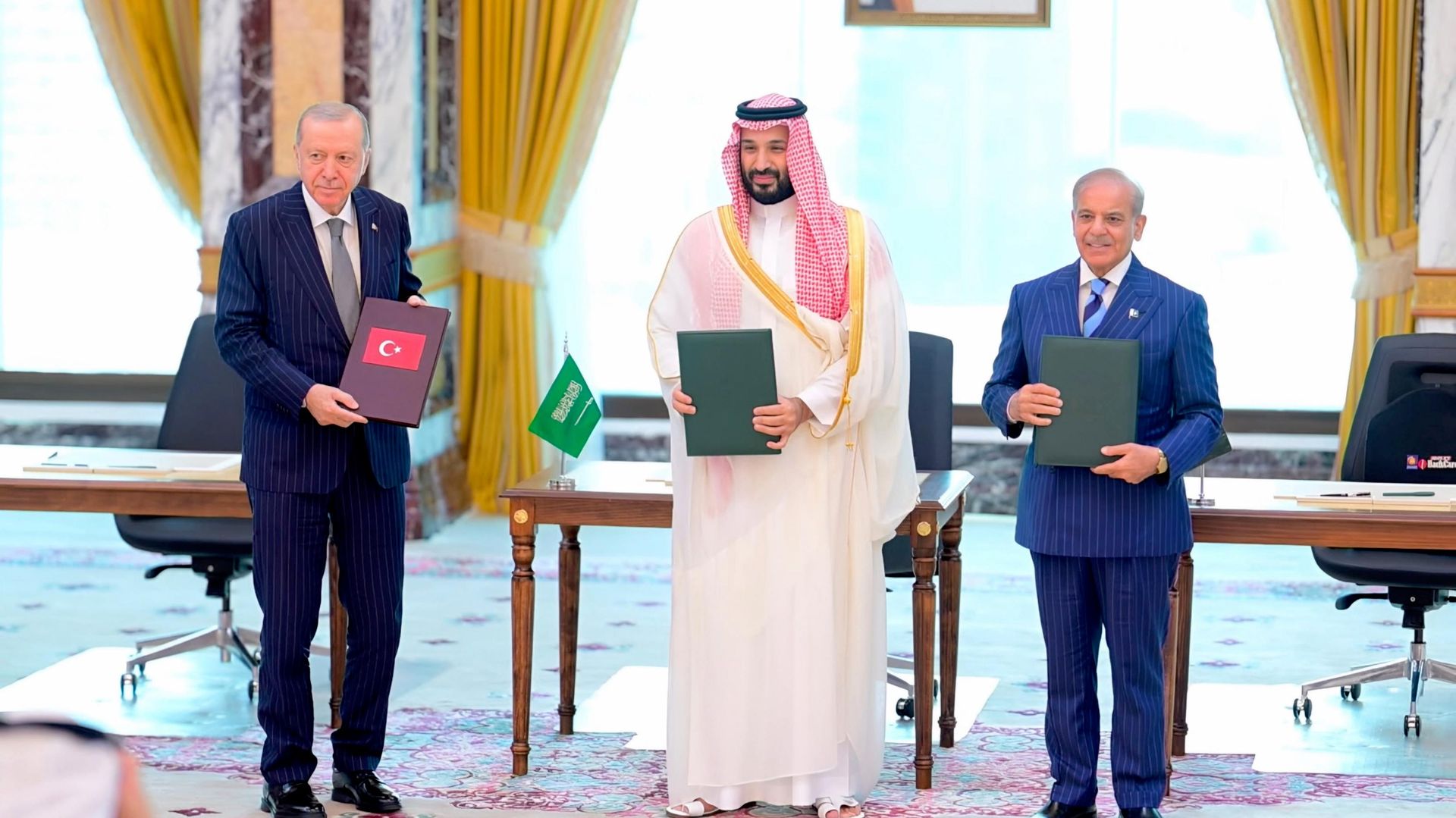
Pakistan has been chosen to lead the Mecca Alliance secretariat for its first three-year term, a move that analysts see as both symbolically and functionally significant.Pakistan, Saudi Arabia, and Turkiye have agreed to further institutionalize their cooperation under the Mecca Agreement to strengthen collective deterrence and defense, with the alliance’s secretariat to be initially headed by Pakistan for three years, the Foreign Office said on Monday.
The decision was taken at the first meeting of the Strategic Political and Defense Committee of the Mecca Agreement in Istanbul.»Pakistan’s selection to provide the alliance’s first secretary-general is both functionally important and highly symbolic,» Abdullah Khan, director of the Pakistan Institute for Conflict and Security Studies, told Sputnik.The move brings Pakistan back to a prominent leadership position among major Muslim nations, according to Khan.The secretariat’s tasks will focus on developing consultation procedures, coordinating joint threat assessments and exercises, enhancing communications and logistical interoperability, enabling secure information-sharing, and drafting a roadmap for defense-industrial cooperation.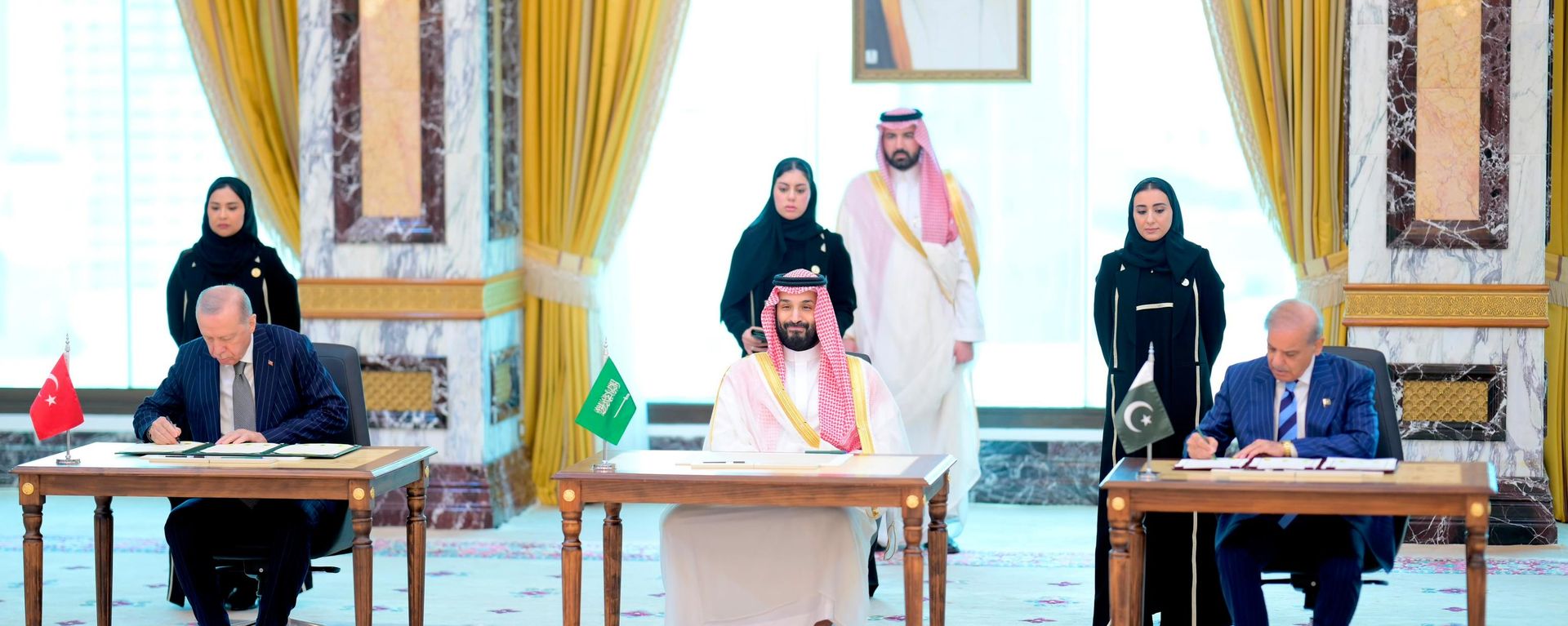 AnalysisA New Axis in the Middle East: What the Mecca Defense Pact Means12 August, 14:11 GMTThe secretariat will coordinate rather than command the armed forces of the three states, Khan emphasized. Its effectiveness, he added, will be judged by how successfully it turns declarations into operational mechanisms.Among the agreements reached in Istanbul was a commitment to pursue joint defense-industrial projects. Khan identified unmanned aerial systems and counter-drone capabilities as the most promising areas for trilateral collaboration.»Joint production can reduce costs, strengthen supply chains, and limit exposure to sanctions or political disruption,» he noted.