To Advance Regional Ties, Japan Must Recognize Its Past Aggression
In this Jan. 18, 2018, file photo, a member of the Japan Ground Self-Defense Force stands guard next to a surface-to-air Patriot Advanced Capability-3 (PAC-3) missile interceptor launcher vehicle at Narashino Exercise Area in Funabashi, east of Tokyo. 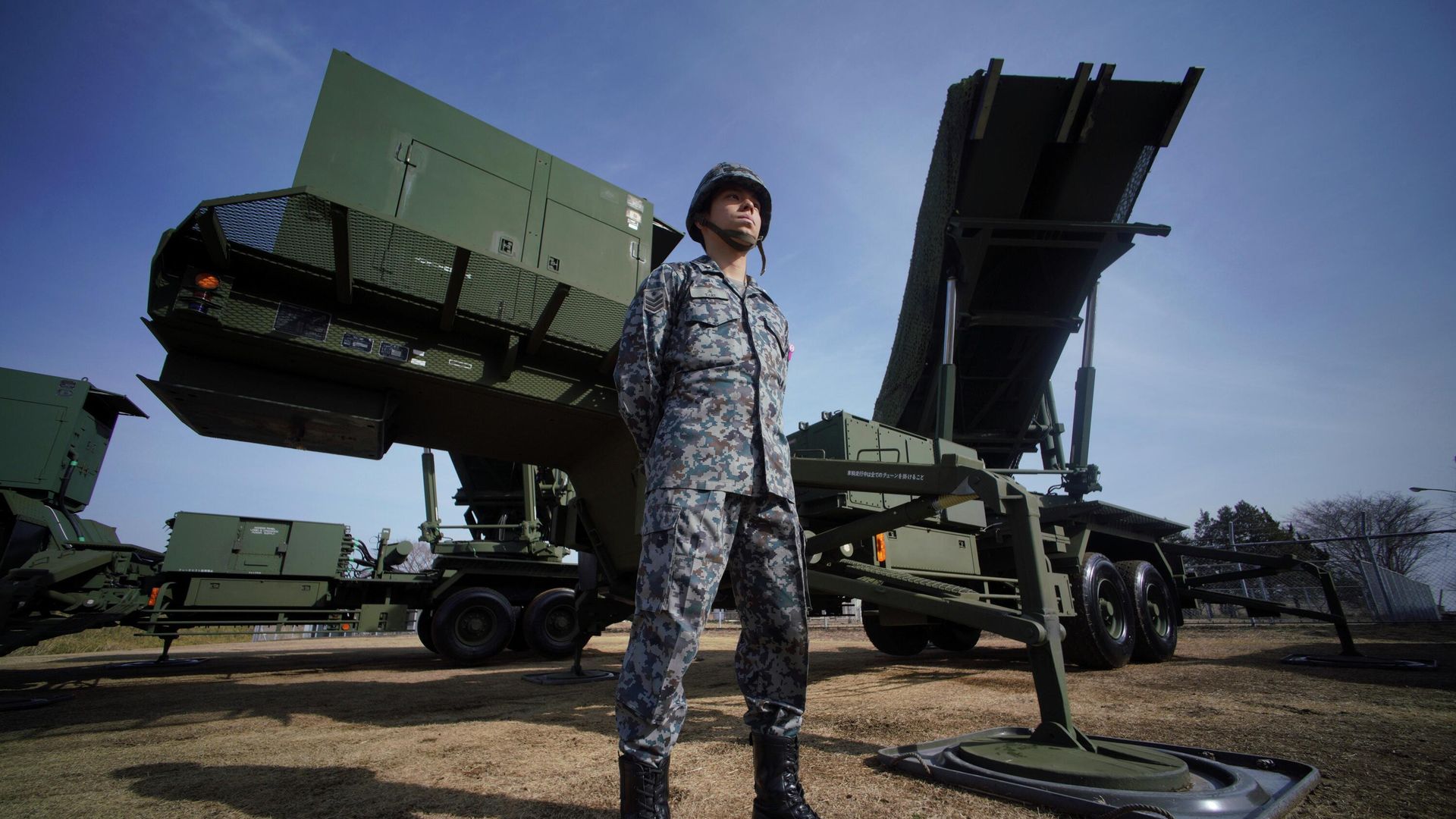
August 15, 2026 marked the 81st anniversary of Japan’s announcement of its unconditional surrender in WWII. Yet 81 years on, Japan continues to remember itself more as a victim than as an aggressor, revealing a deeply alarming disconnect between war memory and historical responsibility. In an interview with Global Times (GT) reporter Liu Xuandi, Issei Hironaka (Hironaka), an associate professor at Aichi Gakuin University, shared his views on the distortion of Japan’s public memory of its past aggression and the risks of forgetting it.Regarding WWII, Japanese society has long centered on the atomic bombings of Hiroshima and Nagasaki and Japan’s own wartime suffering, while glossing over the Japanese military’s war of aggression and atrocities in Asia, particularly in China. How do you assess this «victim-centered» narrative, and to what extent does it evade Japan’s wartime responsibility?
Hironaka: More than 80 years after Japan’s defeat, Japanese society has continued to focus solely on the suffering of the Japanese people during the war. But that suffering was the consequence of Japan’s aggression and wartime atrocities in China, Southeast Asia and the Pacific.
As the generation that had directly experienced the war passed away, firsthand accounts of Japan’s aggression are becoming harder to preserve. This has allowed a distorted memory of the war to take hold — one that highlights Japan’s suffering while pushing the suffering it inflicted on others into the background.
Such selective remembrance inevitably obscures Japan’s wartime responsibility. The historical revisionist remarks made by some right-wing Japanese politicians in recent years have become a major obstacle for Japan to honestly confront and properly reflect on its wartime past.
GT: You previously spoke with Singapore’s Channel NewsAsia about the documentary Inside Unit 731: Japan’s Secret Human Experiments, highlighting the Japanese military’s efforts to destroy evidence of Unit 731’s activities before Japan’s surrender. To what extent have gaps in Japan’s postwar reckoning with its wartime past, including the failure to fully uncover the historical truth, contributed to the rise of historical revisionism in Japan?Hironaka: One reason the history of Japan’s aggression in Asia remains difficult to fully uncover is that, on the eve of defeat, the Japanese military deliberately destroyed vast amounts of documents and other evidence of its atrocities. This systematic destruction was by no means limited to Unit 731. The full extent of Japan’s use of chemical weapons in China remains unclear. Some chemical weapons were buried at the end of the war to conceal the evidence, and decades later, toxic leaks from these buried weapons have continued to harm local residents.
Even today, some Japanese historical revisionists exploit these gaps in the historical record to deny Japan’s wartime responsibility. They argue, for example, that because few records of Unit 731’s biological experiments survive, the experiments must never have taken place.
But destroying the evidence does not erase the crime, and the absence of documents does not mean the absence of historical truth. Related documents, eyewitness testimony and other corroborating evidence can help reconstruct what had happened. Historical truth cannot be covered simply because those responsible people had tried to bury the evidence.
GT: While Japan has failed to fully confront its history of aggression, its security policy is shifting, offerings and visits to the war-linked Yasukuni Shrine continue and military expansion is accelerating. Where will Japan be headed following this dangerous trajectory?
Hironaka: Ignoring the lessons of war and blindly pursuing military expansion is an extremely dangerous path. Japan has expanded military capabilities beyond what is necessary as the geopolitical landscape in East Asia has shifted in recent years, which has become a source of regional instability. Its long-standing tendency to downplay or evade its history of aggression has also fueled concerns among neighboring countries that Japan could return to a path of militarism.
One way to put the brakes on this dangerous trend for Japan is to confront the history of past wars. Eighty-one years after the war, Japan must recognize that it was the aggressor in that war, and relations with the regional countries concerned can only move forward based on this shared historical understanding.This article originally appeared on the Global Times website. Asia’Japan Is Accelerating Its Transformation Into a War State’ — Kim Yo-Jong5 August, 04:11 GMT